
How to Crack the Digital Marketing Game.
A practical guide to building visibility, attracting the right customers, and turning online attention into real business growth.
Introduction
Getting attention online is easy. Getting the right people to notice your business, trust it, and eventually take action is much harder. That is where digital marketing becomes important.
Many small businesses start by posting on Instagram, running an occasional advertisement, or creating a website. Then they expect quick results. When nothing happens, they assume digital marketing does not work.
The real problem is usually not the platform. It is the strategy.
Digital marketing works best when your content, audience, website, advertising, search visibility, and customer experience are connected. If you understand how these pieces work together, you can build steady digital growth without wasting money on random activities.
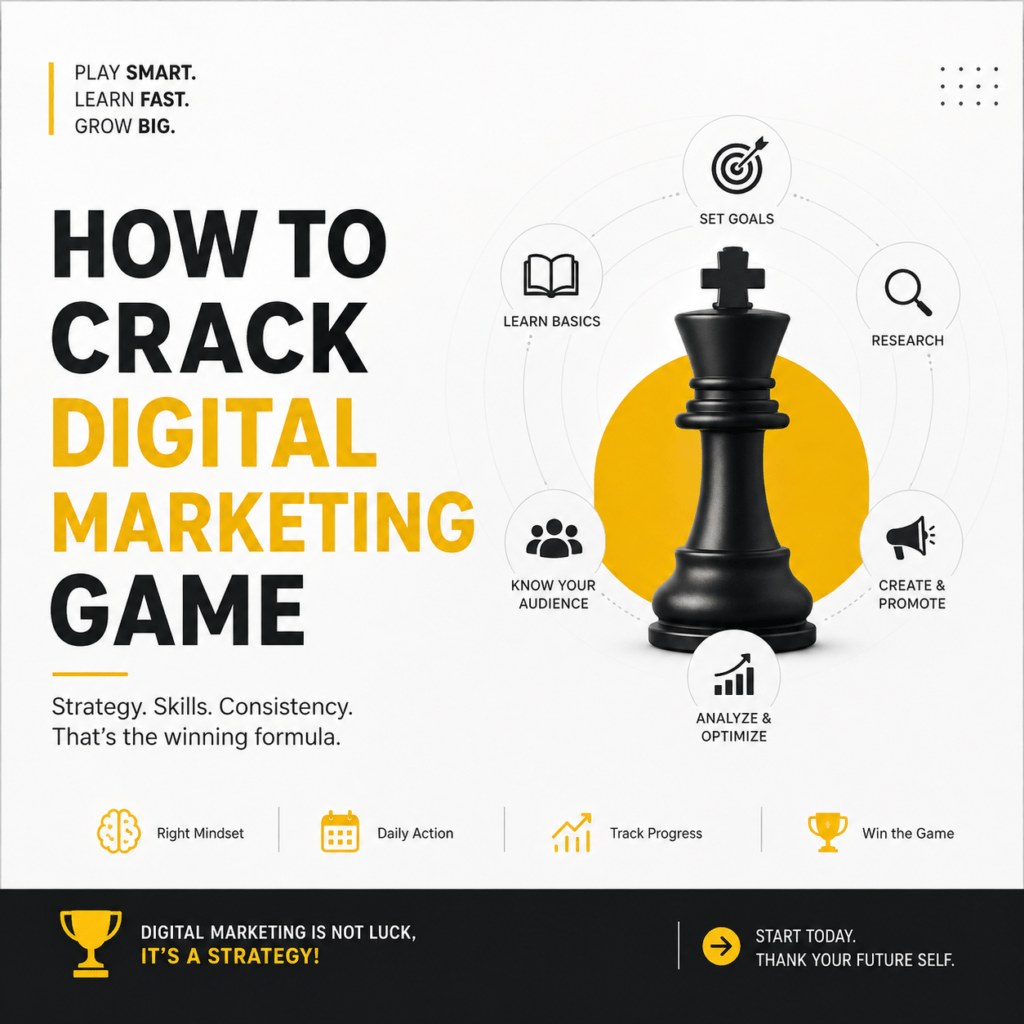
Table of Contents
- Understand what digital marketing actually does
- Know your audience before creating content
- Build a strong digital foundation
- Choose the right marketing channels
- Create content that solves real problems
- Use SEO for long term visibility
- Measure what actually matters
- Common mistakes to avoid
- Frequently Asked Questions
1. Understand What Digital Marketing Actually Does
Digital marketing is not simply posting content online. It is the process of using digital channels to attract people, build trust, generate enquiries, and encourage customers to take meaningful action.
Think about a local clothing store.
A social media post may introduce the store to someone. A Google search may bring that person to the website. Useful product information may build confidence. Reviews can reduce hesitation. Finally, a simple enquiry form or purchase option can turn interest into business.
Each step has a purpose.
A good digital marketing strategy therefore answers four basic questions:
Who are we trying to reach?
What problem are we solving?
Why should people trust us?
What should they do next?
If these answers are unclear, adding more posts or advertisements will rarely solve the problem.
2. Know Your Audience Before Creating Content
One of the most common mistakes businesses make is creating content for everyone.
A better approach is to understand a specific group of people. Look at their problems, buying habits, questions, objections, and expectations.
For example, a fitness coach targeting working professionals should not simply post exercise pictures. Their audience may actually be searching for quick workouts, simple meal ideas, consistency tips, or ways to exercise after a long workday.
That insight changes the content completely.
Before planning your next month of content, write down at least ten questions your customers regularly ask. Those questions can become social media posts, blogs, videos, FAQs, and even advertising ideas.
3. Build a Strong Digital Foundation
Before spending heavily on advertising, make sure your basic digital presence is trustworthy.
Your website should clearly explain what you offer, who it is for, and how someone can contact you. Your social profiles should have consistent information. Your business details should be accurate. Customer reviews should be easy to find where appropriate.
This is where experience matters.
A beautiful website cannot compensate for confusing information. Similarly, thousands of followers do not automatically mean thousands of customers.
Focus first on clarity and credibility.
4. Choose the Right Marketing Channels
You do not need to be everywhere.
A small business may get better results from Google Search and Instagram than from trying to maintain five different platforms.
Choose channels based on customer behavior.
If people actively search for your service, SEO and search advertising can be valuable. If your product depends heavily on visuals, platforms such as Instagram may be more useful. If your business depends on professional relationships, LinkedIn could make more sense.
The goal is not maximum platform presence. It is maximum relevance.
5. Create Content That Solves Real Problems
Good content gives people a reason to stop scrolling or continue reading.
Instead of constantly talking about your business, answer questions your audience genuinely cares about.
For example, a digital marketing agency could create content explaining how much a small business should spend on advertising, why website visitors do not convert, or how to identify a poor performing campaign.
This type of content demonstrates expertise without making exaggerated claims.
A useful rule is simple: teach before you sell.
When people repeatedly find useful answers from your brand, trust starts developing naturally.
6. Use SEO for Long Term Visibility
SEO can become an important part of digital growth because it helps people discover your business when they are actively searching for information.
Start with topics connected to your actual products or services. Research what your audience searches for and create useful pages around those topics.
For example, a local bakery could target searches related to custom cakes, birthday cakes, wedding cakes, and cake delivery in its service area.
Do not write articles simply to insert keywords. Search engines increasingly reward content that genuinely satisfies the searcher’s question.
Strong SEO also includes useful page titles, clear headings, readable content, internal links, fast page performance, mobile usability, and trustworthy information.
7. Measure What Actually Matters
Likes and followers can provide useful signals, but they should not be your only measures of success.
Track metrics that connect to your business goals.
These may include:
- Website visitors
- Search impressions
- Enquiries
- Leads
- Conversion rate
- Cost per lead
- Sales
- Customer retention
Suppose an advertisement receives 100,000 impressions but produces only two enquiries. It may look impressive on a report, but the business result is weak.
Always connect marketing activity to an outcome.
8. Common Mistakes to Avoid
Posting without a strategy: More content does not automatically create more customers.
Changing strategy too quickly: Some campaigns need enough data before you can judge them properly.
Ignoring the website: Social media can attract attention, but a poor website can lose that attention.
Targeting everyone: A specific audience usually gives you clearer messaging.
Copying competitors: Competitor research is useful, but copying their content rarely creates a distinctive brand.
Focusing only on vanity metrics: Engagement matters, but business outcomes matter more.
9. Frequently Asked Questions
Digital marketing is the use of online channels such as search engines, websites, social media, email, and advertising platforms to attract, engage, and convert customers.
Start with a clear target audience, a trustworthy website or business profile, useful content, and one or two channels where your customers are already active.
It depends on the channel, competition, budget, industry, and execution. Paid campaigns can generate results quickly, while SEO and content marketing generally require more time.
SEO is not mandatory for every business, but it can be extremely valuable when customers actively search for the products, services, or information you provide.
There is no universal number. Start with a realistic budget that your business can sustain, test your strategy, measure results, and increase spending when the numbers justify it.
10. Conclusion
Cracking the digital marketing game is less about finding one secret tactic and more about understanding how different activities work together.
Know your audience. Build trust. Create useful content. Make your website clear. Choose the channels that fit your customers. Use SEO for sustainable visibility and measure results based on real business outcomes.
That is how digital growth becomes more predictable.
You do not need to do everything at once. Start with one clear audience, one meaningful goal, and one well planned strategy. Then improve it using what your customers and your data tell you.