
What is SEO?
A Simple Guide to Search Engine Optimization, How It Works, and Why It Matters.
Introduction:
If you have ever searched for a dentist near you, a property dealer in your city, or the best digital marketing agency, you have already used SEO without realizing it.
So, what is SEO?
SEO stands for Search Engine Optimization. It is the process of improving a website and its content so search engines can understand it better and show it to the right people when they search.
For a business, SEO is not simply about getting more visitors. The real goal is to attract people who are actually looking for what the business offers.
For example, a dental clinic does not necessarily need thousands of random visitors. It needs people searching for services such as dental implants, teeth cleaning, or a dentist nearby.
That difference is what makes practical SEO important.
What is SEO?
Search Engine Optimization is the practice of improving a website’s content, structure, technical setup, and overall online presence so search engines can understand and rank its pages for relevant searches.
When someone searches on Google, the search engine has to decide which pages are useful enough to display.
SEO helps communicate three basic things:
What your page is about
Who the page is useful for
Why your page deserves to be considered for that search
Suppose you operate a real estate business in Bhopal.
Someone searches for:
“2 BHK flats in Bhopal”
A page that clearly explains available properties, locations, pricing information, important details, and answers common buyer questions gives Google much more useful information than a page containing only a phone number and a few property photos.
Good SEO starts with understanding the searcher’s actual need.
How Does SEO Work?
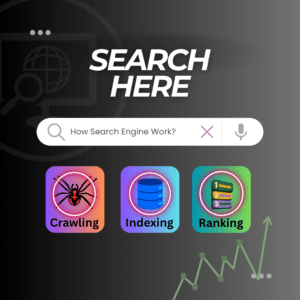
Search engines use automated systems to discover, understand, and organize web pages.
A simplified version looks like this:
| Stage | What happens |
|---|---|
| Crawling | Search engines discover pages and their content |
| Indexing | Useful information from those pages is stored |
| Understanding | Search engines interpret the topic and purpose of the page |
| Ranking | Relevant pages are ordered for a particular search |
| Results | The user sees the pages that the search engine considers relevant |
SEO does not mean telling Google to rank a page manually.
Instead, you improve the page so both users and search engines can understand its value more clearly.
Search Intent Matters
One of the biggest mistakes beginners make is focusing only on keywords.
Consider these searches:
“Dental clinic”
“Dental clinic near me”
“How much does teeth whitening cost?”
These searches show different levels of intent.
The first may be general research. The second suggests someone is looking for a nearby provider. The third indicates that the person wants specific information before making a decision.
Your content should match that intent.
Why Is SEO Important for Businesses?
SEO can help a business become easier to find when potential customers are actively searching for its products or services.
Consider a few examples.
Real Estate
A property business could create useful pages around topics such as:
Flats for sale in a specific location
Property buying guides
Questions about home loans
Local property market information
Comparison of different residential areas
The objective is not to repeat “real estate” hundreds of times. It is to answer questions potential buyers genuinely have.
Dental Clinics
A dental clinic might create separate, useful pages for:
Dental implants
Teeth cleaning
Root canal treatment
Braces
Emergency dental care
Each page can explain the treatment, who may need it, what the process involves, and commonly asked questions.
For health related content, accuracy and professional review are especially important because people may make important decisions based on what they read.
Doctors
A doctor’s website should clearly communicate qualifications, areas of practice, clinic information, appointment details, and medically responsible educational content.
Trust matters just as much as visibility.
Social Media and Digital Marketing
SEO also supports digital marketing beyond traditional website pages.
A company can publish helpful content around topics its audience searches for, such as:
“How to improve Google rankings”
“SEO for small businesses”
“SEO vs paid advertising”
Over time, useful content can bring visitors who are already interested in the subject.
Types of SEO
SEO is often divided into several areas.
1. On Page SEO
This involves improvements made directly to a webpage.
Important areas include:
Page title
Headings
Content quality
Keyword usage
Internal links
Image optimization
URL structure
Search intent
The main question is simple: Does this page clearly answer what the searcher wants to know?
2. Technical SEO
Technical SEO focuses on how easily search engines and users can access and understand your website.
It includes areas such as:
Website speed
Mobile usability
Crawlability
Indexing
Structured data
Secure HTTPS connection
Website architecture
Broken links
A beautiful website can still perform poorly if important pages cannot be crawled or users struggle to use the site.
3. Off Page SEO
Off page SEO refers to signals and activities outside your website.
Backlinks are one example.
If relevant and trustworthy websites reference your content, those links can contribute to how search engines understand your site’s authority.
However, collecting random backlinks simply for the sake of having more links is not a sound strategy.
Relevance and quality matter.
4. Local SEO
Local SEO is particularly useful for businesses serving a specific location.
A restaurant, dental clinic, doctor, salon, real estate office, or local agency can optimize its online presence for searches connected to its service area.
Examples include:
“dentist in Bhopal”
“property dealer near me”
“digital marketing agency in Bhopal”
Accurate business information, a well maintained Google Business Profile, genuine customer reviews, relevant local content, and consistent business details can all contribute to a stronger local presence.
Important SEO Elements You Should Understand
If you are starting SEO, focus on these fundamentals first.
| SEO Element | Why it matters |
|---|---|
| Keyword research | Helps identify what people actually search |
| Search intent | Helps create content that matches the user’s need |
| Quality content | Gives visitors useful information |
| Title tag | Helps communicate the page topic |
| Headings | Organize content for readers and search engines |
| Internal linking | Helps users and search engines discover related pages |
| Technical SEO | Helps search engines access and understand the website |
| Backlinks | Can contribute to authority when earned naturally |
| Local SEO | Helps location based businesses become more discoverable |
| User experience | Makes information easier to access and use |
Common SEO Mistakes
SEO becomes difficult when businesses treat it as a numbers game.
Some common mistakes include:
Keyword stuffing: Repeating the same keyword unnaturally.
Publishing thin content: Creating pages that provide little information simply to target more keywords.
Ignoring search intent: Writing about a keyword without understanding why people search for it.
Buying poor quality backlinks: Building links from unrelated or questionable websites.
Ignoring existing pages: Constantly creating new content while useful older pages remain outdated.
Expecting instant results: SEO generally requires consistent work and time. Results can vary depending on competition, website quality, industry, location, and the search query.
A practical SEO strategy focuses on improving the website rather than trying to manipulate individual ranking signals.
Simple SEO Best Practices
If you are new to Search Engine Optimization, start with the basics.
Step 1: Understand Your Audience
Before researching keywords, identify who you want to reach.
Ask:
What are they looking for?
What problem are they trying to solve?
What information do they need before contacting a business?
Step 2: Research Relevant Searches
Find the words and questions your audience actually uses.
Do not choose keywords only because they have high search volume.
A keyword with fewer searches can sometimes bring more valuable visitors if it closely matches your service.
Step 3: Create Helpful Pages
Each important service should have a clear purpose.
A dental clinic should not put every treatment on one enormous page if separate pages would make the information easier to understand.
Step 4: Improve Existing Content
SEO is not only about publishing new articles.
Review older pages regularly. Update outdated information, improve unclear sections, add useful internal links, and remove information that no longer serves the reader.
Step 5: Measure Meaningful Results
Look beyond traffic.
Depending on the business, useful measurements may include:
Organic impressions
Relevant search queries
Organic clicks
Leads
Phone calls
Form submissions
Appointment requests
Local actions
A thousand visitors are not particularly useful if none of them are interested in your business.
Frequently Asked Questions
SEO is the process of improving a website so search engines can understand its content and show it to people searching for relevant information, products, or services.
SEO stands for Search Engine Optimization.
There is no fixed timeline. Results depend on factors such as competition, website history, content quality, technical condition, authority, industry, and the search terms being targeted. SEO usually requires consistent improvement rather than expecting immediate results.
Organic SEO does not require paying Google for every click. However, SEO still requires resources such as research, content creation, technical improvements, tools, and professional work.
SEO and Google Ads serve different purposes. SEO focuses on organic visibility, while Google Ads provides paid visibility. The appropriate approach depends on the business, goals, budget, competition, and timeline.
Conclusion
At its core, SEO is about helping the right people discover useful information through search engines.
It combines content, technical improvements, keyword research, search intent, website structure, authority, and user experience.
The strongest SEO strategy is rarely about trying to rank for everything. It is about understanding your audience and building pages that genuinely answer their questions or help them take the next step.
For a real estate company, that could mean helping buyers understand properties and locations. For a dental clinic, it could mean explaining treatments clearly. For a digital marketing business, it could mean answering practical questions about marketing and SEO.
Start with the people you want to help. Then build the SEO strategy around them.
Table of Contents
Share this article
Related Blogs


How to Build a Full Funnel Marketing Campaign That Moves Customers From Awareness to Conversion
Read More »Need SEO Services?
Looking for SEO services in Bhopal or reliable SEO support remotely? Let’s work on improving your website’s visibility and helping your business reach the right people through search. Contact Native Linkage today to discuss your website, SEO goals, and the next steps for your business.